Protein 101: What you need to know!
- Angela Czajkowski

- Feb 19
- 4 min read
Updated: Mar 4
We hear about how protein is so important for us to include in our diets, but why? There is so much nutrition information available that it can be overwhelming to know where to start. This article breaks down what protein is, how much you need, and how to easily include it in your daily meals.
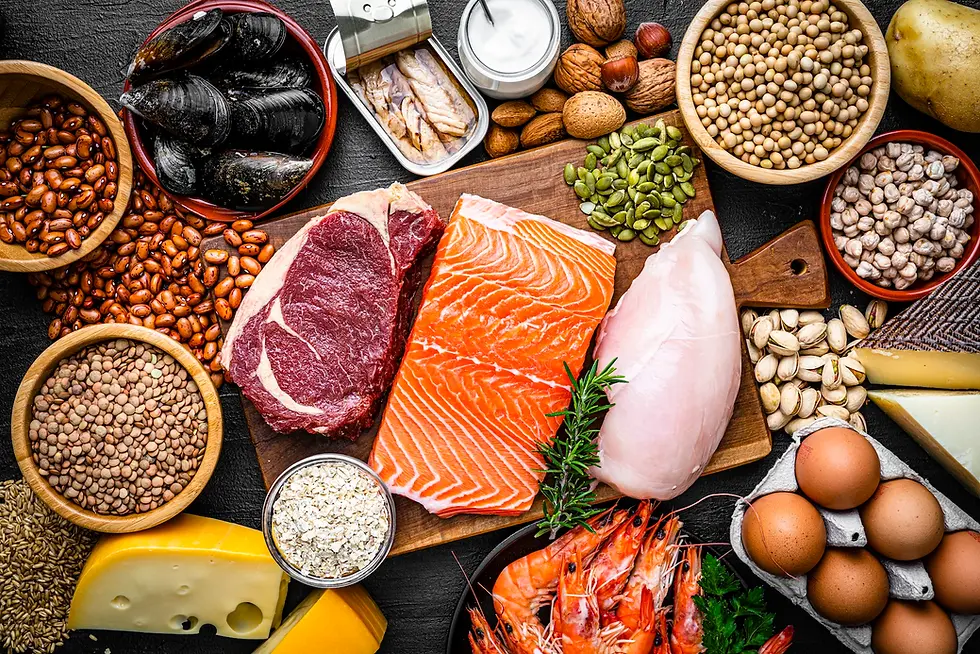
Protein is one of the three essential macronutrients, alongside carbohydrates and fat, that your body needs for daily energy, repair, and overall function. The current dietary guidelines recommend that adults consume 10% to 35% of their calories from protein, which is enough to prevent protein deficiency. So how do we know if we’re getting enough protein in our current diets? Here are some of the signs and symptoms of too little protein:
Problems with hair, skin, and nails
Increased appetite
Increased risk of infections
Mood changes
Muscle weakness
If you are currently experiencing any of these signs, it is best to consult your healthcare professional to determine whether you are in fact getting a lack of protein or if your signs and symptoms could be connected to a different concern.
We talked about a general percentage of how much protein we should be consuming, but how much exactly is 10%-35%? The Dietary Guidelines for 2026 recommends that adults aim for between 1.2 and 1.6 grams of protein per kilogram (g/kg) of body weight. This is nearly double the previous recommendation of 0.8 g/kg.
To calculate the minimum amount of protein you personally should consume, divide your weight in pounds by 2.205 to get your weight in kilograms, then multiply by 1.2, which is the minimum recommended protein intake in grams for your diet.
For example, if you weigh 150 pounds, that’s about 68 kilograms. Multiplying by 1.2 is 81.6. In theory, then, a 150-pound person should eat 81.6 grams of protein a day at a minimum.
Now that you know the minimum amount of protein you should consume, you should also that know that your daily protein needs vary by age, sex, physical activity, and health status. Here are specific factors that influence your protein needs:
Physical activity: Physically active people may require more protein per day to build and maintain muscle mass.
Age: Older adults need adequate protein intake to help slow sarcopenia (age-related muscle loss).
Health goals: A higher-protein diet may help with weight loss or maintenance.
Medical conditions: People with certain medical conditions, such as chronic kidney disease, may be advised to follow a lower-protein diet, as it may help slow kidney damage.
Pregnancy status: Dietary needs change during pregnancy, and the recommended protein intake increases
Okay! So you know how much protein to eat, what factors determine if you should increase or decrease the amount of protein you are eating, and signs/symptoms that you may be experiencing a protein deficiency. Now, let’s talk about the sources of where you can get your protein intake from!
You can get protein from plant-based or animal sources. I know there's a big debate on this, but whether you prefer animal or plant-based foods, you can certainly meet your daily protein needs. To keep it easy and convenient, here are high-protein foods that you can add to your everyday meals:
Animal-based proteins include:
Chicken breast (3 oz) — about 21–25g
Lean beef (3 oz) — about 21–24g
Turkey (3 oz) — about 22g
Salmon (3 oz) — about 22g
Tuna (3 oz) — about 20g
Dairy options include:
Greek yogurt, plain (¾–1 cup) — about 15–20g
Cottage cheese (½ cup) — about 12–14g
Plant-based choices include:
Tofu (½ cup) — about 10g
Tempeh (½ cup) — about 15–17g
Lentils (½ cup cooked) — about 9g
As you can see, it is easy to incorporate protein into meals, no matter what your dietary preference is! Let’s make it practical! Here are some tasty ways to incorporate these high-protein foods into your meals:
Try having a grilled chicken salad or grilled chicken with roasted vegetables.
For beef, you can try a slow-cooked beef stew
With turkey, try options like turkey bacon or meatballs
You can also enjoy smoked salmon on toast or a salmon salad.
Greek yogurt is great for parfaits with fruit or savory bowls with cucumbers and olives.
Cottage cheese goes great with veggies.
For tofu or tempeh, try stir-frying or roasting tempeh with vegetables.
Lentils are wonderful in salads, curries, or green bowls.
Bottom Line:
Protein is one of the three essential macronutrients that your body needs for daily energy, repair, and overall function.
Current dietary guidelines recommend that adults consume 10% to 35% of their calories from protein.
It is recommended that adults aim for between 1.2 and 1.6 grams of protein per kilogram.
To calculate the minimum amount of protein you should consume, divide your weight in pounds by 2.205 to get your weight in kilograms, then multiply by 1.2.
Takeaway Question:
What is one high-protein food that you can add to your meals TODAY?
Sources:
Comments